Our Capabilities – 1st Expertise
Co-engineering for Plastic Components
+35 years
of plastic injection molding expertise
38
team members
19
injection molding machines
+200
Available resin and material grades
90%
of production equipment robot-equipped
20 million
parts manufactured annually
How We Support Your Project
Turn an idea, drawing or product specification into a production-ready plastic component.
Précis Plastic Injection gets involved from the earliest stages of development, helping industrial customers turn an idea, sketch or product specification into a plastic component designed for efficient industrial production.
Our mission is simple: to help you develop a high-performance, economically viable product designed from the outset for efficient injection molding.
With more than 35 years of expertise in thermoplastic processing, PPI acts as a true industrial partner, helping you secure your project, reduce development risks and optimize costs from the earliest design stages.
Why Involve PPI Early in the Design Process?
Project Maturity
Support at Every Stage of Development
Not every project starts at the same level of maturity.
Our teams can get involved at different stages of the development process:
01
from an initial idea
02
from a sketch
03
from a product specification
04
from an existing 3D model
05
as part of a product optimization or production transfer project
We can develop a plastic component from the ground up or rework an existing design to ensure compatibility with injection molding requirements.
This flexibility enables us to work with a wide range of customers and project teams, including industrial startups, engineering firms, R&D teams, industrialization managers and purchasing departments.
Our Approach
The Five Steps of Co-engineering
Requirements Review & Feasibility Assessment
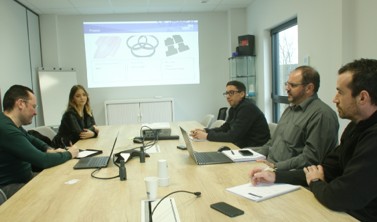
Every project begins with an in-depth discussion with your teams to understand the product and its requirements.
We review key parameters including:
- product functions
- technical requirements
- cost targets
- regulatory requirements
- appearance requirements
- required ingress protection levels (IP rating)
- impact resistance requirements (IK rating)
- expected production volumes
This initial assessment enables us to confirm project feasibility and identify the technical solutions best suited to the application.
Material Selection
+200
RAW MATERIAL REFERENCES
Selecting the right material is critical to achieving the required product performance.
Mechanical strength, thermal resistance, visual appearance, operating environment, recyclability and manufacturing cost all need to be considered when selecting the appropriate material.
With access to more than 200 material grades, our teams help customers identify the solution best suited to their application and manufacturing requirements.
Our material portfolio includes engineering thermoplastics as well as recycled and bio-based materials. Our objective is to achieve the right balance between technical performance, sustainability and total cost.
Design for Manufacturability (DFM): Optimizing Plastic Part Design for Reliable Production
Designing a plastic component goes beyond meeting its functional requirements.
Part geometry must also be compatible with the injection molding process to ensure reliable, repeatable production.
Our engineering teams focus on key design considerations such as:
- optimizing wall thickness
- minimizing warpage and deformation risks
- improving part release and demolding
- integrating assembly requirements
- increasing part robustness (strength)
- simplifying downstream manufacturing operations
By addressing these requirements early in the development process, we help improve part performance while reducing the need for costly design adjustments during industrialization.
Design-to-Cost: Optimizing Total Project Cost from the Design Stage
The cost of an injection-molded plastic component depends on much more than material price alone.
Key cost drivers include:
- tooling investment
- cycle time
- mold complexity
- assembly operations
- level of automation
- quality requirements
Our Design-to-Cost approach considers the project as a whole to identify cost-saving opportunities without compromising product performance or quality.
Depending on the application, even a relatively simple design change can help:
- reduce material consumption
- simplify tooling
- shorten cycle times and increase production output
- lower unit manufacturing cost
Our goal is to achieve the right balance between upfront investment, product quality and long-term cost competitiveness.
Design for Assembly (DFA): Integrating Assembly Requirements from the Start
Plastic components are often designed to become part of a larger assembly or finished product.
During the co-engineering phase, we integrate assembly requirements early in the design process to improve:
Anticipating these requirements before industrialization helps avoid costly modifications once the product has entered production.
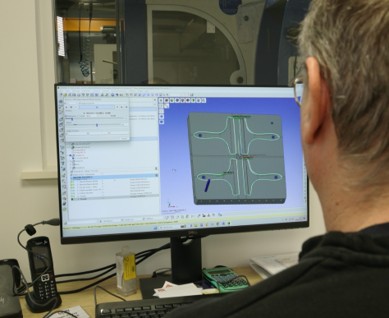
3D Printing & Machining
3D printing enables us to quickly produce physical prototypes to:
- review the component at full scale
- validate geometry and form
- assess ergonomics
- check functional interfaces
- present the product to engineering and project teams
This validation stage helps secure key design decisions before committing to industrialization and production tooling.
Injection-Molded Prototypes
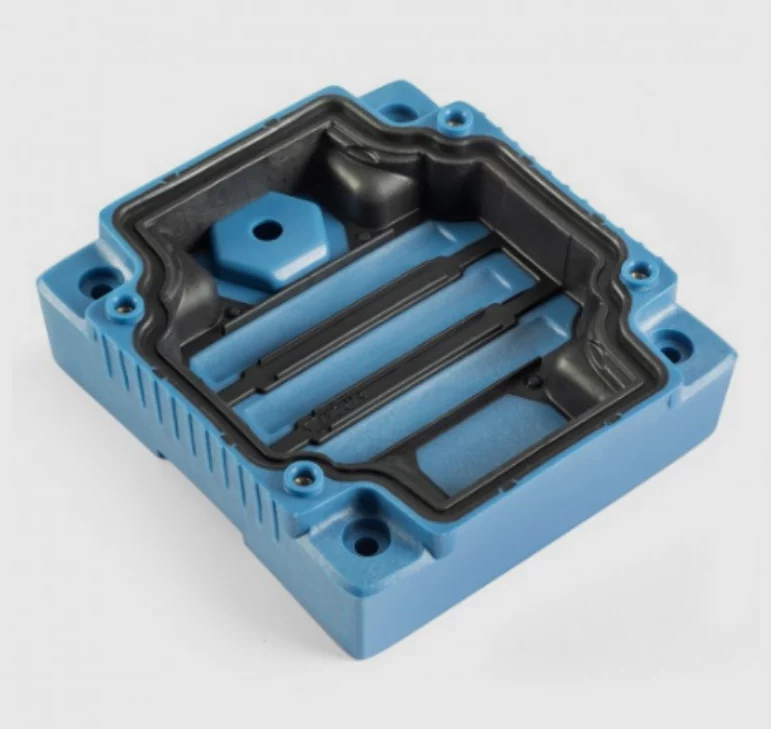
Depending on project requirements, PPI can also develop prototype mold inserts fitted into our own mold bases. This approach reduces initial tooling investment while enabling the production of several hundred or even several thousand injection-molded parts before committing to full-scale serial production.
These production-representative parts can be used for functional testing, field trials and product validation under conditions closely reflecting final production.
Transparency
A Transparent, Collaborative Approach
Successful industrial projects depend on close collaboration between every stakeholder involved.
At PPI, we build our customer relationships around:
Our goal is to provide each customer with tailored engineering and manufacturing support, reducing project risk and ensuring a controlled path to industrialization.
Production Transfer
Production Transfer
PPI also supports industrial companies looking to relocate or transfer the production of existing plastic components in order to improve cost competitiveness, enhance quality or strengthen supply chain security.
Because our machining capabilities are integrated directly within our production facility, we can rapidly assess and adapt existing tooling, shorten the transition to production and optimize transfer costs. Our teams help manage the technical transition to achieve a reliable and controlled production ramp-up.
Our Other Capabilities
More PPI Capabilities
Frequently Asked Questions
FAQ — Co-engineering
What does co-engineering mean for an injection-molded plastic part?
Co-engineering means developing a product in close collaboration with an injection molding specialist so that manufacturing, quality and cost requirements are considered from the earliest design stages. This approach reduces industrialization risks while improving product performance and manufacturability.
Can you work from an initial sketch or concept?
Yes. We can get involved from the earliest stages of a project, starting with an idea, sketch or product specification. Our engineering team can help turn the initial concept into a solution designed for injection molding and industrial production.
Can you optimize an existing 3D model?
Yes. Our teams review existing 3D models to assess their compatibility with the injection molding process and identify opportunities for technical and cost optimization. This may include adjustments to geometry, wall thickness, moldability or other design features affecting manufacturing performance.
How do I select the right plastic material for my application?
Material selection depends on the mechanical, thermal, appearance, environmental and regulatory requirements of the product. Our teams help identify the material best suited to the application and its manufacturing requirements.
Why involve an injection molding specialist early in the design process?
Considering manufacturing requirements early in product development helps prevent design issues, shorten development lead times and optimize manufacturing costs. Early supplier involvement also makes it possible to address moldability, material selection, tooling and production constraints before the design is frozen.
Can PPI also handle product industrialization?
Yes. PPI supports customers throughout the entire industrialization process, from co-engineering through serial production. Our capabilities include material selection, mold engineering and manufacturing, plastic injection molding, secondary operations including marking, painting and chrome plating, assembly, quality inspection, packaging and logistics. This end-to-end approach enables us to supply individual components, ready-to-integrate subassemblies or finished products ready for market.
PPI
Let’s Discuss Your Project
Developing a Plastic Component?
Our team can support you from design through industrialization.
Your contact

Céline JEANNIN
Sales Manager